Protecting a Grade I Listed Icon Without Touching the Structure
At a Glance Customer Impact

£10k - £40k+
repair costs avoided

25-40%
faster scaffold install

880
plates deployed

High-Wind
safety improved through stable load-spread platform
The Customer
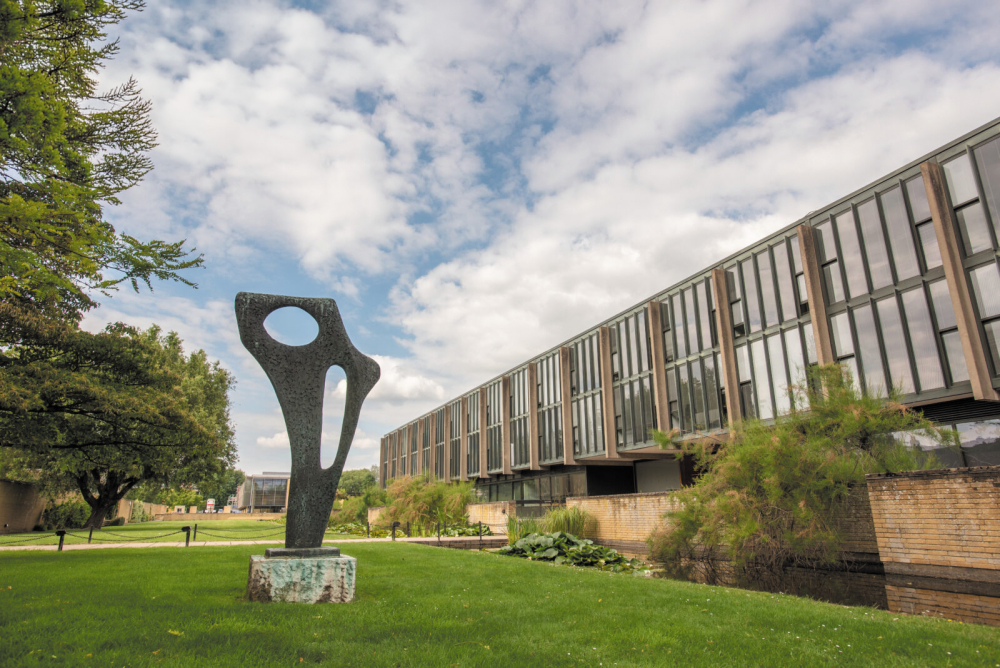
Beard Construction, a heritage specialist, refurbished St Catherine’s College, a Grade I listed building where no structural intervention was permitted, requiring a carefully considered, non-invasive approach to protect the historic structure.
The Challenge
Stabilise a Complex Scaffold Without Touching the Structure Working on a Grade I listed building meant Beard Construction could not drill a single scaffold tie into the building. All stability had to be achieved from the ground up — on soft, uneven terrain. Any ground impact could trigger costly restoration and weeks of delay. Beard Construction needed a way to disperse heavy loads safely — with zero contact to the historic building.
Traditional options such as timber mats or ground excavation carried significant risks and costs, including:
- Damage to delicate stonework or foundations
- High localised loading (up to 9 tonnes per scaffold standard)
- Time-consuming ground preparation
- Increased risks when Monoflex sheeting amplified wind load
The Solution
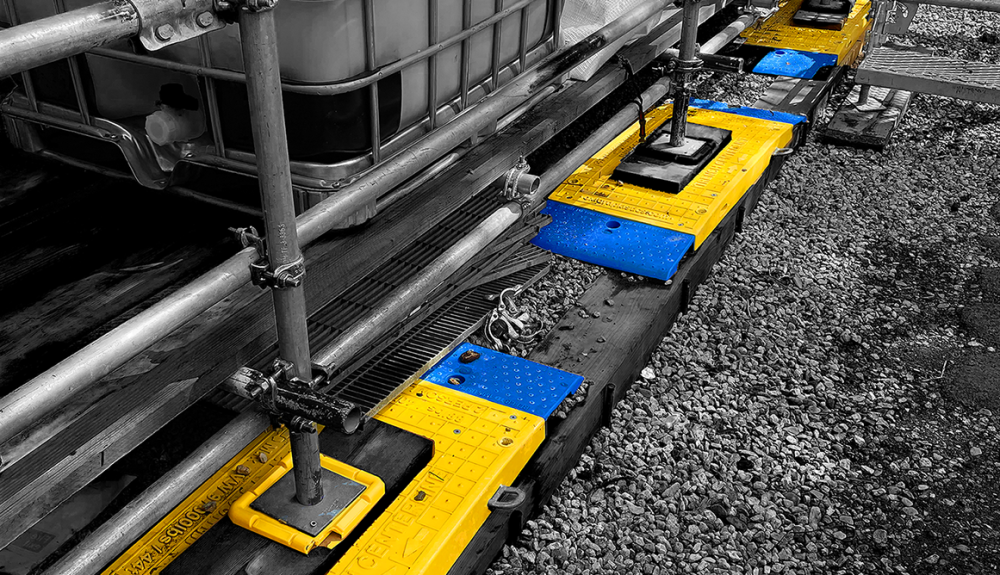
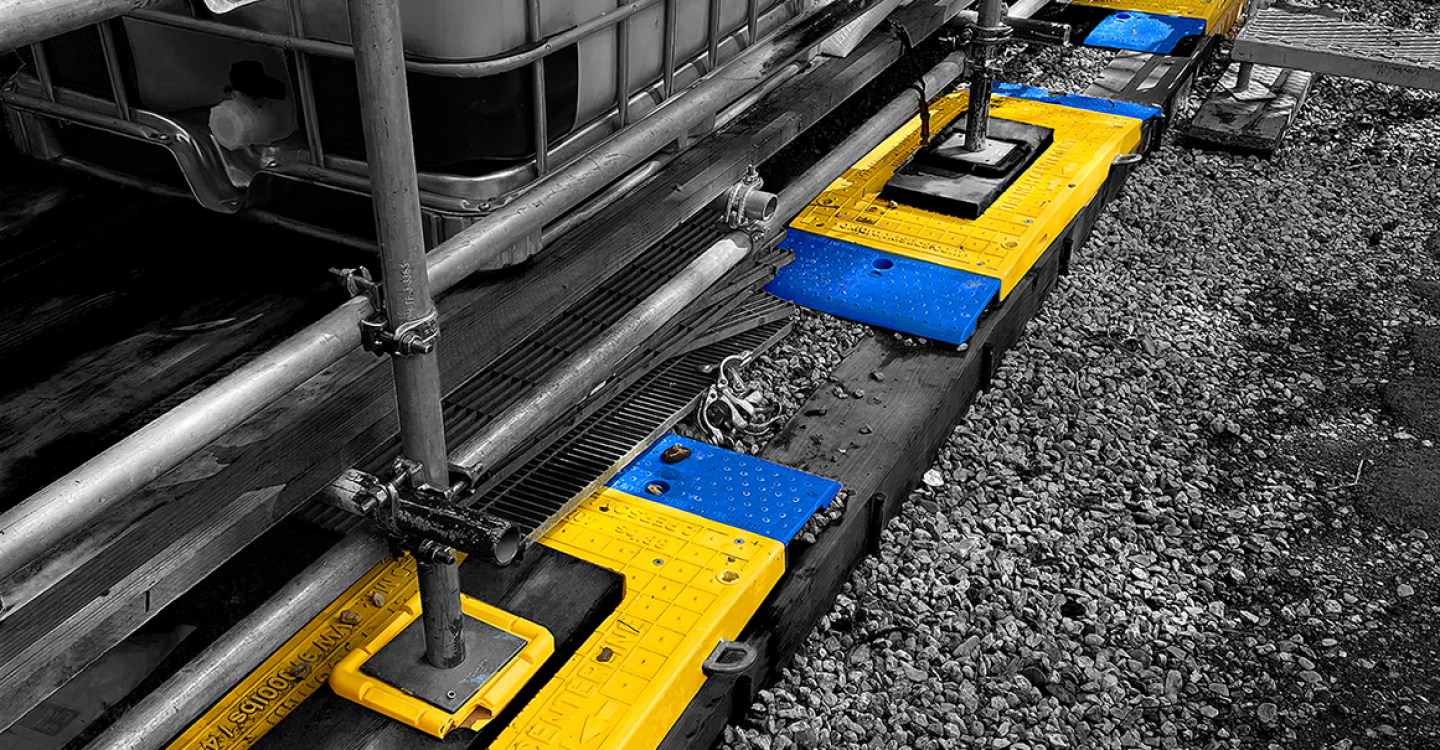
Non-Invasive Management With no structural penetration allowed, LowPro 15/05 was used to spread loads safely across the site, protecting the Grade I listed building. 880 road plates created a stable, non-invasive working base that kept the project moving without risking the historic fabric.
Benefits
- Spread scaffold loads evenly across a wide footprint
- Prevented pressure hot-spots that could crack or disturb stone flooring
- Required no excavation, drilling, or mechanical fixings
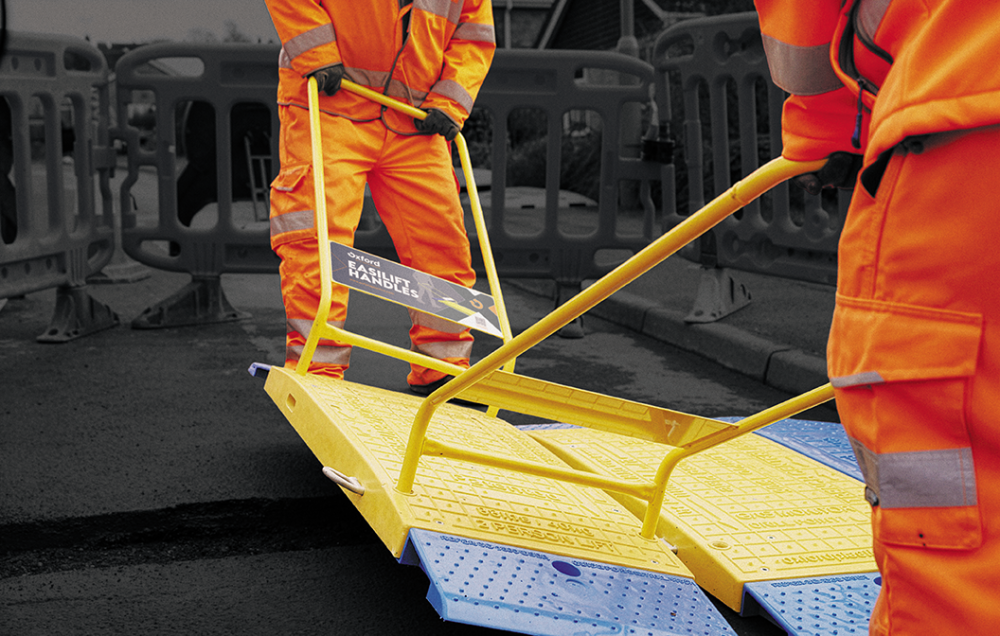
- Enabled rapid installation by hand due to lightweight engineering
- Integrated easily with railway sleepers in critical zones for even greater load dispersion
This approach provided the necessary engineering stability without harming the heritage asset.
The Outcome
Protection, Efficiency and Zero Structural Risk
The combined solution delivered measurable value across the project:
- Zero damage No impact to listed facades, stone floors or foundations, avoiding costly repairs.
- Faster scaffold installation Lightweight, hand-installable plates reduced setup time by an estimated 25-40% compared to steel plates or groundworks.
- Improved stability in high winds A stable load platform resisted uplift forces from Monoflex sheeting.
- Standards-compliant temporary works Providing assurance for engineers, contractors and the college.
- Fully reversible solution Once removed, the ground was left completely untouched, a critical requirement for Grade I buildings.
- Proven versatility Demonstrating LowPro 15/05 as a heritagesafe load-management system, not just a trench cover, in high-risk environments.
- This project showcases the versatility of the LowPro 15/05 not just as a trench cover, but as a heritagesafe load-management system for high-risk environments.
Beard Construction
Using LowPro plates eliminated the need for invasive groundworks and saved days in scaffold installation. Most importantly, it removed the risk of damaging a Grade I listed building — a cost that could have run into the tens of thousands.
Why This Matters?
This case demonstrates how modern, composite-based temporary works systems can replace invasive traditional methods and provide:
Reduced Risk
Reduced Cost
Reduced Time
More Case Studies

Maintaining Pedestrian & Wheelchair-Friendly Sidewalk Access
Supporting safe access and community continuity during urban gas Works in Kansas City.

Barhale Reduces Carbon Footprint with Oxford Plastics' Composite Road Plates
Learn how Barhale reduced their carbon footprint, improved efficiency and increased safety when trialling the LowPro range at the Hampton Loade Treatment Works.

Product training day: Avalon Barrier
The Avalon Barrier has been the key focus of our most recent product training day, focussing specifically on the ‘Right to Repair’.